
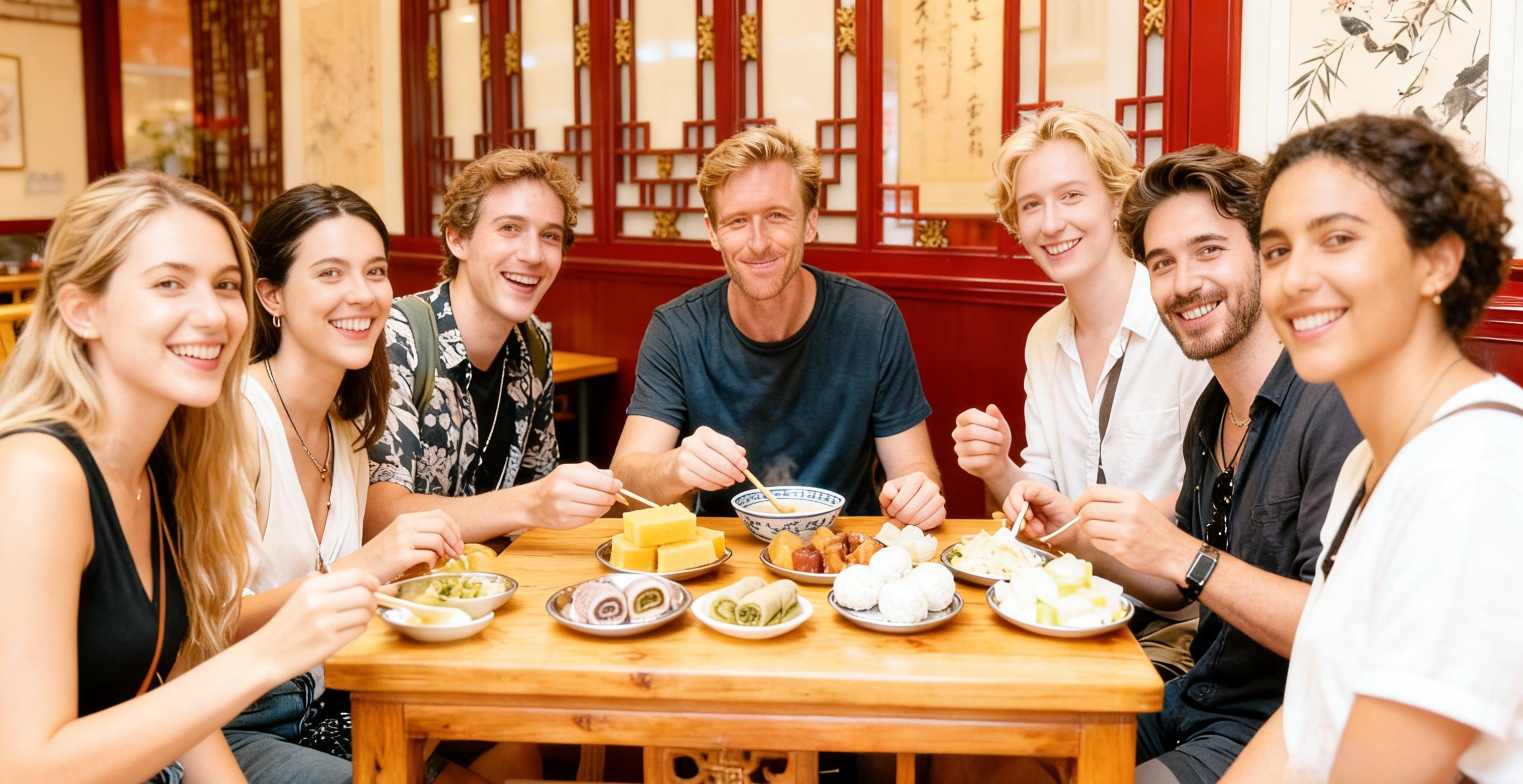
3 hr
Hutong Food Walking Tour with 15+ Authentic Tastings
Explore Beijing's historic alleyways while sampling over 15 traditional snacks and local specialties
Reserve
Hand-picked by our editors — only the best 5 culinary experiences from 18 reviewed
Verified partners for every tour, free cancellation where available, and instant confirmation on every booking.
3 hr
Explore Beijing's historic alleyways while sampling over 15 traditional snacks and local specialties
Reserve
3 hr 30 min
Savor authentic Beijing cuisine in historic alleyways with hotpot, noodles, rare dishes, and craft beer
Reserve
4 hr
Discover authentic Beijing through 20+ street food tastings in historic alleyways with a local guide
ReservePrices from verified partners. Availability updates in real time at checkout. Free cancellation policies apply where shown.
The landmarks, rooms, and views travelers on this tour remember — all visible on a single visit.
A historic street featuring the ancient Imperial Academy and traditional archways.
They complement each other; most visitors who do both call the guided experience the more insightful option for deep culinary discovery. Opting for a beijing private hutong food walking tour provides expert curation, while independent navigation offers total freedom.
| Feature | Top pick Private Food Tour | Self-Guided Exploration |
|---|---|---|
Access to hidden vendors |
Guaranteed entry to local spots | Public access only |
Historical context |
Deep narrative provided by guide | Manual research or apps required |
Navigation ease |
Seamless transit through complex alleys | High effort required to navigate |
Cost |
Premium service fee | 0 CNY |
Culinary variety |
Diverse curated tasting menu | Dependent on individual selection |
Time commitment |
Structured 2–4 hours | Flexible duration |
| See tickets → |
Verdict: Securing beijing private hutong food walking tour tickets is best for those seeking local stories and efficient navigation, whereas self-guided visits allow for a slower pace to absorb the atmosphere of these Beijing landmarks.
Choose your ticket, select your date, and reserve in under two minutes. Secure checkout handled by our verified partner.
Instant confirmation by email, with a mobile voucher you can save offline. No printing, no queuing at a collection desk.
Arrive at the entrance, show your voucher on your phone, and walk in. Most tickets include priority or skip-the-line access.
Practical details for your visit straight from our verified partners — hours, access, rules, and how to get there.
Dongcheng District
Exit B or C depending on tour plan
Take Subway Line 5 to Beixinqiao Station.
Request a drop-off at the main road entry of the hutong.
Wear comfortable walking shoes suitable for stone pavement during your beijing private hutong food walking tour. Dress in layers appropriate for Beijing's autumn temperature fluctuations.
Keep belongings secure in a crossbody bag, as you will navigate tight alleys. There are no lockers provided for any beijing private hutong food walking tour.
Photography is permitted in public spaces, but respect resident privacy. Do not photograph inside private homes during your local Beijing walking tour.
Most hutongs have narrow, uneven stone surfaces which may be difficult for wheelchairs. Consult your operator about specific accessible routes for your Beijing Hutong food tour.
Mobile signal is generally strong, but navigation apps may struggle with deep alley precision. Download offline maps before starting your Beijing heritage tour.
The beijing private hutong food walking tour is suitable for older children who enjoy walking and trying new street foods. Strollers are difficult to maneuver in tight spaces.
Sample local delicacies at vendor stalls chosen during your beijing private hutong food walking tour. Always carry bottled water as street stalls provide specific regional snacks.
Pets are generally discouraged due to the crowded nature of narrow alleys and food preparation areas. Check with your guide if you plan to bring a service animal.
Public restrooms are limited in residential areas, so plan accordingly. Your guide will provide insights into local culture throughout the private Beijing walking tour.
Best time to go, insider tips, nearby landmarks, and the cancellation fine print — flip through to skim what matters to you.
How crowds, weather, and events shift across the year.
Autumn offers mild temperatures and clear skies, perfect for walking tours. This is the optimal window to enjoy outdoor evening food culture.
Small details that turn a good visit into a great one.
Tip Body
Keep small denominations of CNY for street food stalls that may not accept digital payments.
Avoid loud conversations in residential alleys especially during the late evening.
Stay close to your guide as the alleys can be confusing for first-time visitors.
Be open to sampling diverse snacks offered during the food walking tour.
Visit between 17:00–20:00 to see the neighborhood come alive with evening activity.
Non-bookable sights within a short walk — free to visit, easy to pair.
A historic Tibetan Buddhist temple featuring grand architecture.
An ancient site dedicated to Confucius with historical stone tablets.
Flexible, no hidden fees.
As a private experience, bookings follow the operator-specific terms provided at checkout. Since public hutongs charge 0 CNY for entry, no refunds apply to the location access itself.
Hand-picked options within walking distance — pick a district for vibe, or a specific hotel for convenience.
Beijing's hutong alleyways—narrow residential corridors dating to the thirteenth-century Yuan Dynasty—form the last intact grid of courtyard neighborhoods in a capital that has demolished seventy percent of its historic core since 1949. The word hutong derives from the Mongolian hottog, meaning "water well," because early settlers built homes around shared wells that became social anchors. Dongcheng District preserves the densest cluster, where grey-brick siheyuan courtyard homes shelter multi-generational families and small workshops that have operated from the same doorways for decades. A Beijing private hutong food walking tour navigates this living archive through its culinary landmarks. Unlike the sanitized lanes of Nanluoguxiang, where rents pushed out local vendors by 2015, working hutongs in Dongcheng maintain their original ecology: breakfast jianbing carts that arrive at dawn, hand-pulled noodle windows open since the 1980s, lamb skewer grills that occupy the same corner each evening. These are not restaurants but extensions of home kitchens, where recipes pass vertically through families rather than horizontally through franchises. The culinary vernacular—zhajiangmian wheat noodles with fermented soybean paste, baodu tripe cooked in sesame oil, tanghulu hawthorn berries glazed in hardened sugar—remains stable because the clientele is local, not transient. The architecture shapes the food culture. Narrow lanes prohibit delivery trucks, so ingredients arrive by tricycle each morning from Xinfadi wholesale market. Courtyard layouts lack modern plumbing, so vendors cluster near public taps. Summer heat drives cooking outdoors, turning alleys into open-air dining rooms where strangers share benches. Winter cold concentrates activity around baozi steamers and roasted sweet potato carts that double as hand warmers. This environmental logic, unchanged for centuries, produces a food map legible only on foot. Private culinary walking tour Beijing itineraries decode that map, connecting vendors who rarely advertise beyond hand-painted signs and word-of-mouth. Evening hours—between the end of the workday and the start of night markets—capture the rhythm when hutong residents eat, when grills fire up and dumpling fillings are mixed fresh.
"These are not restaurants but extensions of home kitchens, where recipes pass vertically through families rather than horizontally through franchises."
A step-by-step walkthrough of the visit — what you'll see, how long each stage takes, and the details that matter.
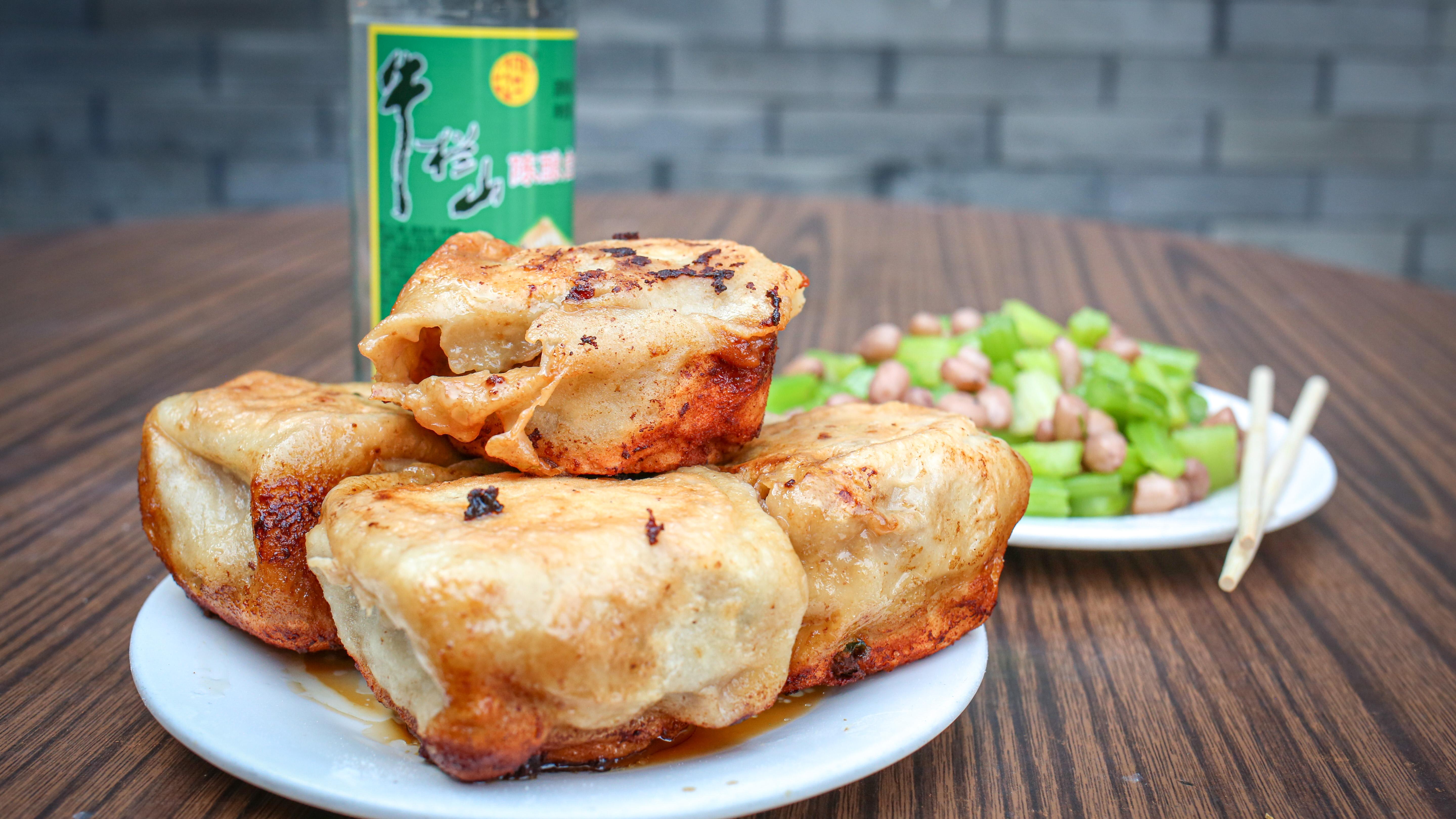
You meet your guide near the Drum Tower at dusk, when the September air begins to cool and alley shadows lengthen. The first stop is a jianbing cart where the vendor ladles mung bean batter onto a circular griddle, cracks an egg, folds in crisp wonton skin and scallions. You eat it standing, the way locals do, before turning into a narrow lane barely wide enough for two bicycles to pass. The route winds through interconnected courtyards, pausing at a noodle window where a chef hand-pulls dough into thirty strands in twelve seconds, then drops them into boiling water. You taste zhajiangmian at a plastic table shared with a family finishing dinner. Three blocks east, a lamb skewer grill occupies a corner beneath a scholar tree, smoke rising through its branches. Your guide orders five skewers dusted with cumin and chili powder, still crackling from the coals. The walk continues to a baozi shop operating from a repurposed siheyuan courtyard, where bamboo steamers stack four high and pork-leek dumplings arrive too hot to hold. You pause at a century-old yogurt shop that serves Beijing's traditional flavored dairy in ceramic jars, then finish at a tanghulu stand where hawthorn berries on bamboo skewers are dipped in bubbling sugar syrup that hardens into glass-like shells within seconds.
Public hutongs in Dongcheng District are open 00:00–23:59 daily.
There is a 0 CNY fee to access public hutongs, though individual food items cost extra.
The best arrival window is 17:00–20:00 to see the vibrant local street food culture.
Yes, families are welcome, though be aware that narrow paths may be difficult for strollers.
Yes, photography is permitted in public spaces, but please respect the privacy of residents.
Wear comfortable walking shoes and dress in layers appropriate for the autumn season.
Guides select reputable stalls, but consume at your own discretion based on personal dietary needs.
Use the Beijing Subway to reach nearby stations like Beixinqiao or follow the specific meeting point in your confirmation.
Cancellation policies depend on your specific operator; check your booking confirmation for details.